Myanmar Emerges as Major Opium Supplier Following Taliban Drug Ban: NCB Report
The 2022 ban imposed by the Taliban on drug production in Afghanistan has led to Myanmar becoming a significant alternative source for global opium, especially affecting India’s eastern borders, particularly through the Manipur corridor. This alarming trend is detailed in the Narcotics Control Bureau (NCB) annual report for 2026, released on June 26 by Home Minister Amit Shah.
The report reveals that the northeastern states of Manipur, Mizoram, and Nagaland are facing severe consequences due to increased drug production in Myanmar. Enhanced production has turned these states from mere transit points into major centers for drug distribution into the Indian hinterland. This situation is exacerbated by porous border regulations, such as the Free Movement Regime (FMR) along the India-Myanmar border.
Drug Cultivation and Trafficking
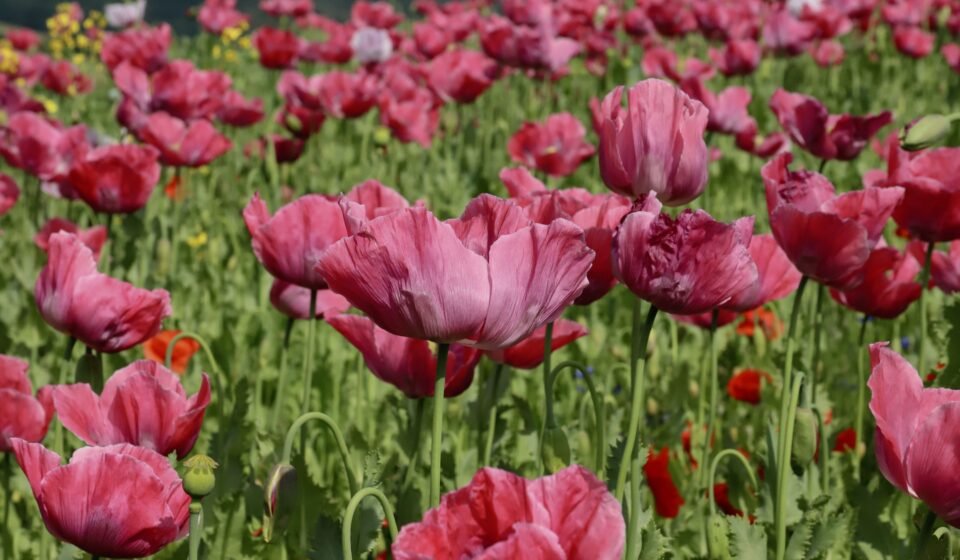
Myanmar has seen a significant increase in illicit opium cultivation, rising by approximately 56% from 2021 to 2023, with the total area under poppy cultivation reaching 45,200 hectares. The Manipur corridor serves as the most accessible entry point for this growing production, with visible repercussions already noted by authorities.
The NCB’s report emphasizes that Myanmar’s Golden Triangle has not only solidified its status as a primary opiate supplier but has also become a central hub for methamphetamine production, particularly in regions controlled by ethnic armed groups in Shan State. The Manipur corridor, which is traversed by Indian National Highway 102, is crucial for both heroin and methamphetamine trafficking.
Major Trafficking Routes
Another significant trafficking route commences through Champhai in Mizoram, which borders Myanmar’s Chin State. The report highlights that drugs are smuggled across poorly monitored border areas and directed towards Silchar in Assam’s Barak Valley via Aizawl and other roadways.
In 2025, Mizoram registered 1,477 kg of seized amphetamine-type stimulants, out of a national total of 3,485 kg. Other states reporting significant drug seizures included Manipur (535 kg), Delhi (454 kg), Gujarat (308 kg), and Karnataka (164 kg).
Western Border Concerns
Despite the Taliban’s crackdown in 2022, which drastically cut Afghan opium production by 93% from its peak, about 13,200 tonnes of illicit narcotics prior to this ban continue to fuel trafficking routes into India from the west. The NCB underscored the alarming rise in drone-based drug trafficking from the Pakistan border, particularly into Punjab, which has surged five-fold over the past five years.
In 2025 alone, there were 305 documented instances of such trafficking, leading to the seizure of 468 kg of narcotics, marking a 96% increase from 2024. Punjab reported 298 of these cases, with seizures primarily comprising heroin (449.751 kg) and methamphetamine (9.018 kg). Overall, Punjab represented 58% of total national seizures, representing an alarming trend in narcotics trafficking.
Surging Statistics on Drug Incidents
The NCB’s report illustrates the alarming growth of drone-assisted drug trafficking: incidents rose from just 3 cases (10 kg) in 2021 to 35 cases (148 kg) in 2022, followed by 28 cases (103 kg) in 2023. The most staggering increase occurred in 2024, where 178 incidents (236 kg) were recorded, which continued into 2025. This growth demonstrates the evolving capabilities of drug trafficking networks utilizing unmanned aerial vehicles (UAVs) to bypass conventional border controls.
“The scale of this threat is underscored by the growth trajectory,” the report stated, revealing the increasingly sophisticated methods employed by traffickers.